 Live Chat
 Live Chat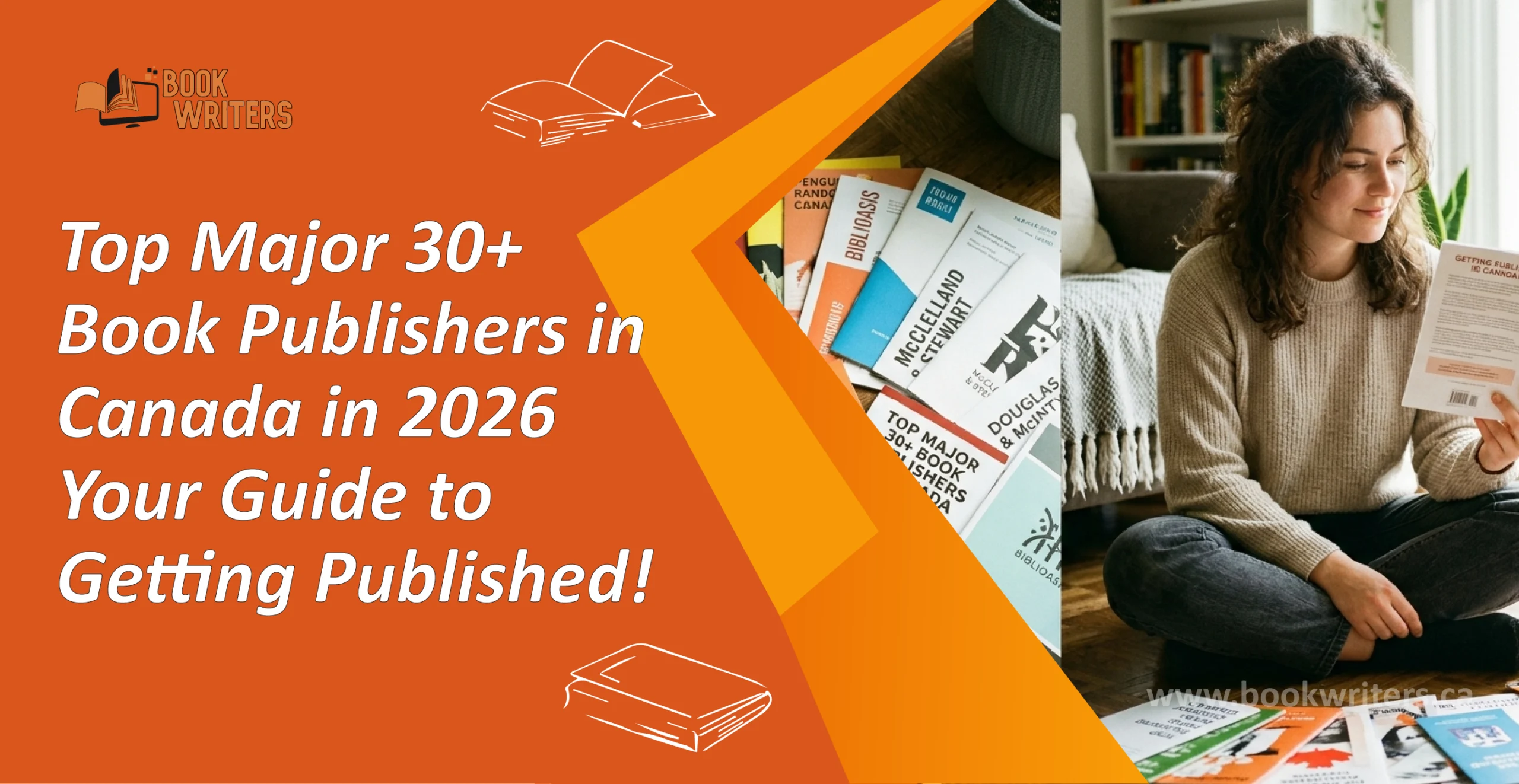
It is exciting for authors to have their manuscripts published; however, it is sometimes difficult to choose the appropriate publishing house. The Canadian publishing industry is rich and diverse and includes publishing houses, independent presses, university presses, and genre-specific publishers.
It is important for writers to know what services each kind of publishing houses provides since the choice of the publishing partner can greatly affect many aspects of writing.
How Can Canadian Authors Choose the Right Publisher for Their Book?
Which publishing house to choose depends on many factors, including the manuscript, genre of the work, the aims for its publication, and personal preferences concerning author participation in the process. For example, some publishers concentrate on the production of literary fiction books exclusively, others – on children’s literature, academic books, non-fiction, poetry or commercial fiction.
Authors also need to think about whether the publishing house considers unsolicited manuscripts or works via literary agents. This will make the publication process more effective and straightforward.
Which Major Canadian Publishers Should Authors Know in 2026?
The publishing scene in Canada is diverse and involves several large and small publishing houses. Authors are likely to come across some of these publishers such as Penguin Random House Canada, HarperCollins Canada, Simon & Schuster Canada, Scholastic Canada, Dundurn Press, ECW Press, House of Anansi Press, Coach House Books, Greystone Books, Annick Press, Groundwood Books, Orca Book Publishers, Kids Can Press, Nimbus Publishing, Goose Lane Editions, McClelland & Stewart, Douglas & McIntyre, Biblioasis, Between the Lines, University of Toronto Press, UBC Press, Wilfrid Laurier University Press, University of Alberta Press, University of Manitoba Press, Fernwood Publishing, Arsenal Pulp Press, Talonbooks, Insomniac Press, and Véhicule Press.
Publishers vary in terms of what they look for in submissions as well as what kinds of titles they publish. This means that it is better for authors to investigate different publishers instead of thinking that a big publishing house is always the best.
What Should Authors Compare Before Sending a Manuscript?
Criteria-based comparison between various publishers may be useful in making the process more realistic. Writers must pay attention to genre specialization, submission process, distribution capability, editorial assistance, and the publishing format.
|
Type of Publisher |
Most Suitable For |
Important Factor to Consider |
|
Major Trade Publisher |
Popular fiction and nonfiction |
Often highly selective |
|
Independent Publisher |
Literary works and specialized books |
Strong editorial process |
|
Academic Publisher |
Research-oriented and academic books |
Serves a specialized audience |
|
Children’s Publisher |
Illustrated books and children’s fiction |
Expertise in age-specific publishing |
|
University Press |
Academic and professional books |
Catalogue is primarily research-oriented |
How Do Publishing Requirements Differ Across Canadian Book Publishers?
The submission process may be different in many respects. Some publishers take direct submissions from the author, while others require submission through a literary agent. There are publishers who accept submissions only during certain times, while some focus on a certain region, genre, or topic.
An author should submit his query letter, synopsis, manuscript, or proposal based on the current guidelines of the publisher. Following the guidelines properly shows your professionalism and decreases the chances of rejection of your otherwise qualified manuscript because of technicality.
What Publishing Formats Should Canadian Authors Consider in 2026?
There is more than just the print book in the contemporary publishing industry. Today, people consume books in different ways, and Ebooks and audiobooks are some of the important factors that an author must keep in mind while thinking about publishing.
The capacity of the publisher to help you publish in print, digital, and audio form can affect how your book reaches your audience.
How Can Authors Find the Right Publishing Path in Canada?
There is no one publishing method that will work for all manuscripts. While traditional publishing may have professional editing, distribution, and knowledge of the industry, the competition for acquiring the books may also be tough. Self-publishing may give more flexibility and attention, whereas other publishing methods may give authors more control over the process of publication.
While studying professional book writers in Canada, it is important to focus not on the size of the publisher but on the other criteria such as its catalogue, reputation, submission guidelines, distribution, etc.
What Should You Do Before Approaching a Canadian Publisher?
The act of preparation is one of the most crucial aspects of the publication process. The author must make sure that his or her manuscript has been properly edited and proofread, and that his or her submission adequately describes the book’s idea and its intended audience.
It is also very important to research each individual publishing house’s submission requirements because they are subject to change, and the more targeted your submission is to an appropriate publisher, the better off you’ll be.
Conclusion
Canada provides writers with a rich and ever-changing publishing scene that consists of large publishing houses, independent publishers, university presses, and specialized publishers who cater to different target markets. The best publisher isn’t always the largest one but rather the one which fits the writer’s needs based on their editing style, publishing strategy, target market, and distribution method.
Through thorough research of publishers, professional preparation of the manuscript and knowledge of the possible publishing options, Canadian writers are able to feel more confident when entering this industry.