 Live Chat
 Live Chat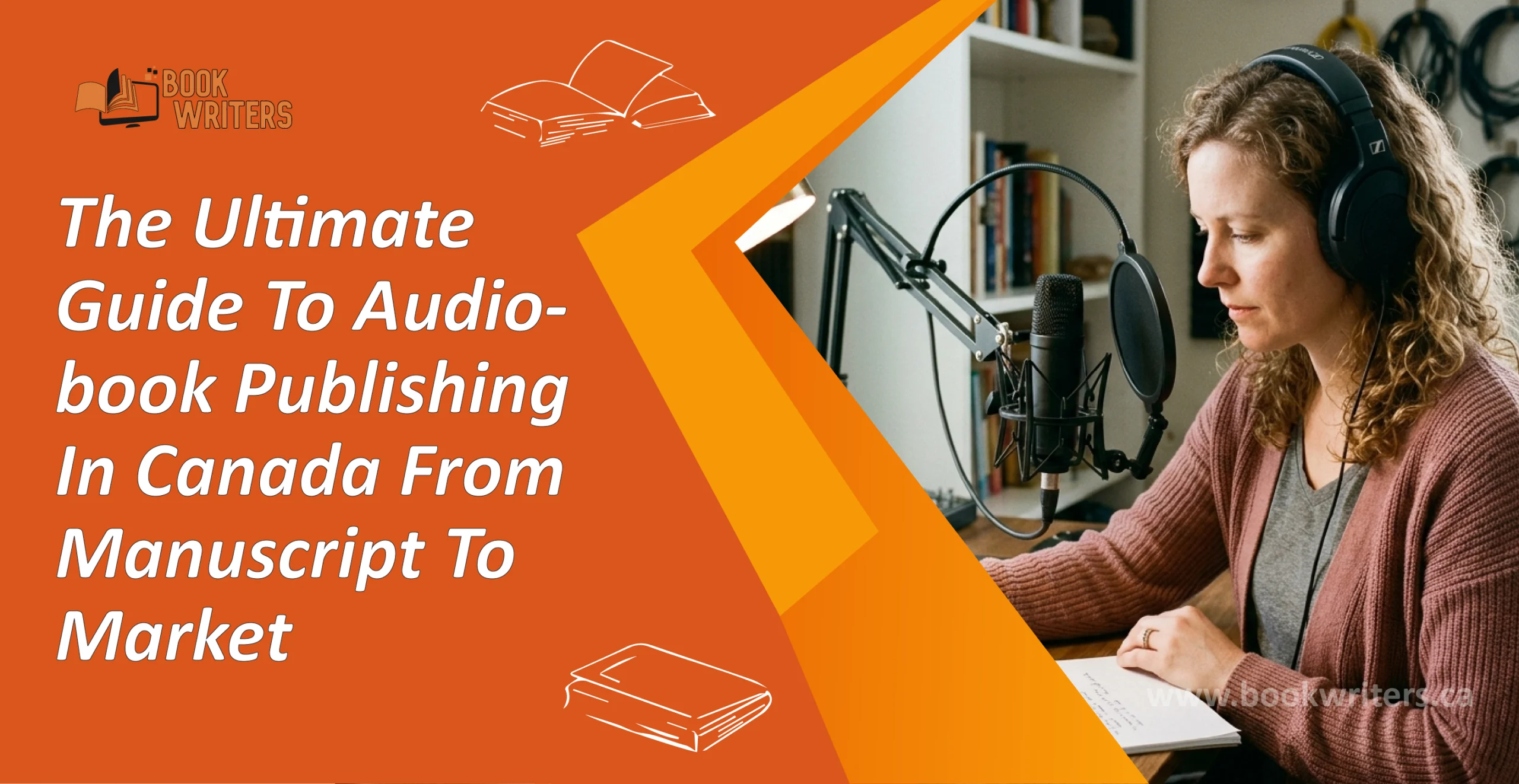
Audiobooks have become an integral part of the publishing world in Canada, allowing listeners the freedom to read books while commuting, exercising, working, or even relaxing. On the side of authors, getting their manuscript converted into an audiobook opens up new opportunities for them to reach out to audiences through a different medium.
Nevertheless, audiobook publishing is much more complex than just having a manuscript recorded into an audiobook format.
Why Should Authors Turn a Finished Manuscript Into an Audiobook?
An audiobook can provide access to an existing book through a wider range of people. Some people with limited time will enjoy an audiobook more and, in some cases, listeners will appreciate audio books more than traditional readers.
Also, audiobooks should not replace print or electronic books but rather be used to enhance them. This would give people a choice of how to read the same book.
How Should a Manuscript Be Prepared Before Audiobook Production?
However, a written manuscript does not mean that the text is ready to be narrated immediately. The text should be carefully analyzed for difficulties with pronunciation, dialogue between characters, abbreviations, words in foreign languages, figures, and phrases which might sound differently when read out loud before any recording starts.
Also, formatting the script used for the narration will make it easier for the narrator to follow the text during the recording process.
How Do Authors Choose the Right Narrator for Their Book?
The narrator becomes the voice of the author’s book; thus, choosing the right narrator is crucial to the creative process. An expressive voice needs to correspond to the genre of the book, its tone, target audience, and mood.
The children’s story may need an expressive voice with a certain energy level, whereas the business book may demand an expressive, conversational one. In fiction where there are several characters, the narrator who is able to create distinct voices is needed too.
The good narrator does not only read the words but also interprets them.
What Happens During Professional Audiobook Recording?
After preparing the manuscript and the narrator, recording is carried out in a controlled setting using professional microphones and appropriate acoustic treatments.
Recording is done on a chapter-by-chapter basis and it is done with consistency in terms of pace, pronunciation, tone, and volume. The process may be evaluated and done again if required.
It is very essential to do professional recording since there are many aspects that could make the listening unpleasant.
How Does Audio Editing Turn Raw Recordings Into a Finished Audiobook?
The raw narration needs considerable post-production work before it can be distributed as an audiobook. Mistakes, noise, unnecessary pauses, and other problems need to be removed from the file without disrupting the rhythm of speech.
Further processing and mastering of the audio is done to ensure compliance with audiobook standards. This could include adjustments of the volume, dynamics, and chapter endings and beginnings.
What is not being aimed at is making the narration sound over-processed. The aim is to produce good clean audio which is pleasant to listen to.
How Do Different Audiobook Production Approaches Compare?
| Feature | DIY Production | Professional Production |
| Narration | Author or self-chosen narrator | Carefully selected narrator suited to the book |
| Recording | Home setup or basic recording studio | Professional recording environment |
| Editing | Usually handled by the author | Completed by professional audio editors |
| Sound Quality | Can vary greatly depending on equipment and experience | Consistent and ready for distribution |
| Time Involved | Often takes longer due to the learning process and corrections | Completed through a well-organized production workflow |
| End Product | Depends heavily on the author’s technical skills | Professionally tailored for an engaging listening exper |
Which Audiobook Publishing Services in Canada Can Help Authors Reach Listeners?
After production, distribution is the next thing that needs to be taken into account. The audiobook publishing services in Canada will be able to assist the process at various stages, including production, quality check, file creation for distribution, and publication requirements for authors.
When planning the distribution method, one should look at where the target audience listens to audiobooks and how to find those people using appropriate retailing and subscription platforms. Proper metadata, description, and cover design will make the audiobook more noticeable.
How Can Authors Market a New Audiobook Effectively?
It is best to start marketing audiobooks before releasing them. Current readers can be made aware of the audio version via email lists, social networks, author websites, and online books communities.
In addition, a short narration clip will allow future listeners to instantly hear what the narration sounds like and what quality of production they will get. Authors can combine marketing of their print and ebook versions with that of the audiobook rather than marketing them as two different products.
What Should Authors Check Before Their Audiobook Goes to Market?
The finished audio book must be subjected to one last check prior to its release. Writers should look out for any parts that have been omitted, incorrect pronunciation, background noise, improper numbering of chapters, technical issues, and any mistakes that have been made in the editing process.
Metadata should also properly indicate the title of the book, its author, its narrator, its genre, and all other publishing details. The cover art and description of the audiobook must conform to the overall branding of the book.
How Can a High-Quality Audiobook Strengthen an Author’s Publishing Strategy?
It is best to produce audiobooks in tandem with other publishing efforts, as a professionally produced audio version of a written manuscript can help keep that book alive and make it accessible to new readers.
It may seem like an overwhelming task, but breaking down the production process into stages like manuscript preparation, voiceover, recording, editing, mastering, distribution, and marketing helps simplify things greatly.
Conclusion
Conversion of the manuscript to an audiobook is a complex yet creative publishing process. That involves strategic decision-making in each stage of its realization. This includes the choice of a suitable narrator. As well as the creation of high-quality sound recordings and subsequent preparation of the final audio files for distribution.
Thus, for Canadian authors, the development of a proper strategy for the production of an audiobook from their manuscript can result in the creation of a professionally executed audio book that may attract new readers.