 Live Chat
 Live Chat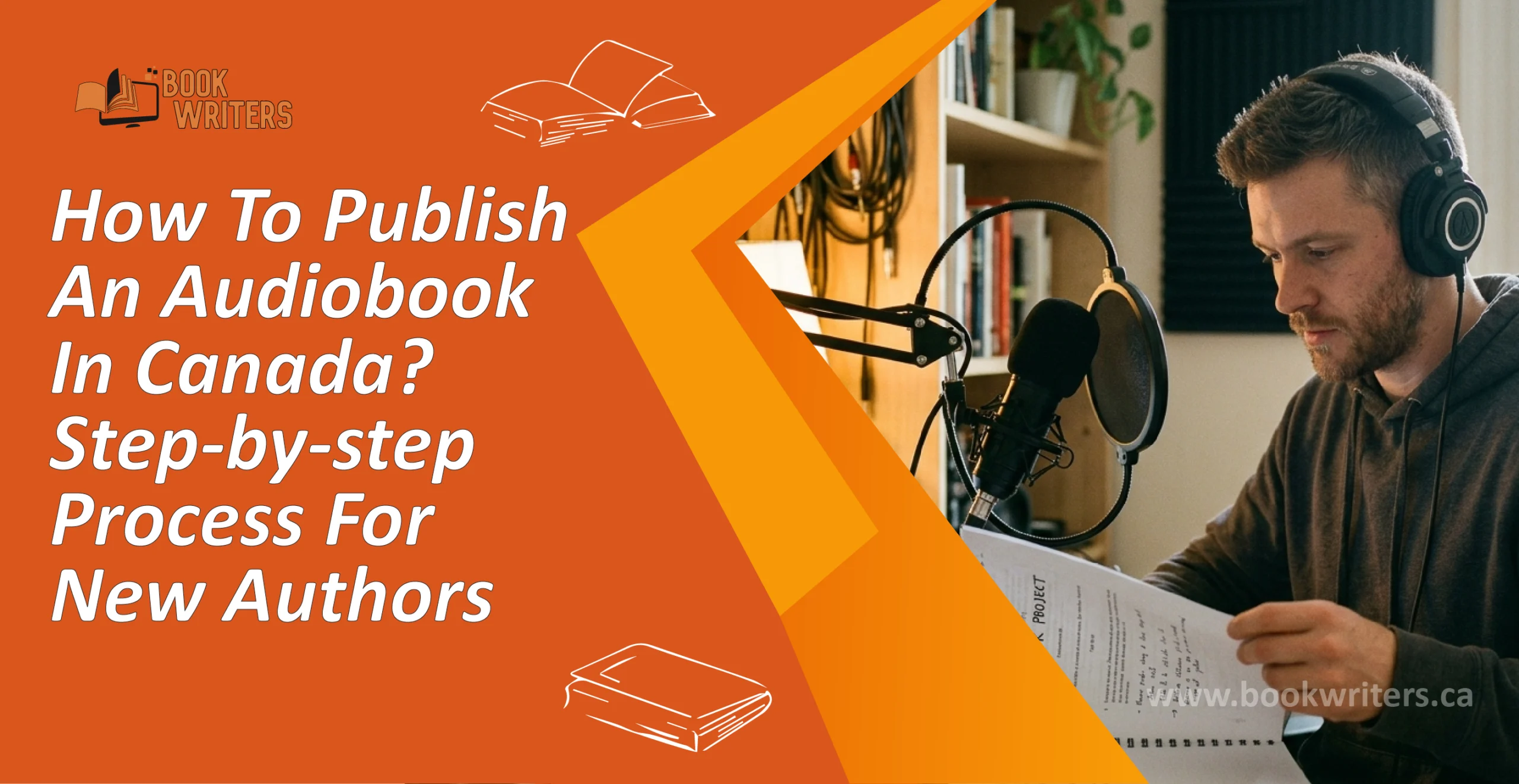
Listening to books via audiobooks has proven a convenient way for authors to connect with people who would rather listen to books during their commute, work-outs, work sessions, or leisure time. In Canada, publication of an audiobook can serve as another means for distribution of your book.
Publishing of an audiobook is not just about recording your book. Preparing your book, deciding on the approach to production, creating an audio master of your choice, taking care of metadata, and choosing the right distribution platforms require understanding of each step.
What Should You Prepare Before Turning Your Book Into an Audiobook?
It all starts with preparing the manuscript for the audio production process. The editing, proofing, and structuring phases of the process would preferably be done prior to the recording phase since the latter entails changes that would necessitate costly re-recording.
Authors need to evaluate whether their writing is suitable for being narrated verbally. Elements such as dialogues, headings, footnotes, tables, and special formatting might need adjustment to make it suitable for being read out aloud.
There should be clarity regarding the copyright issue, especially if the book involves copyrighted material, quotes, illustrations, or contribution from other authors.
Should You Narrate Your Own Audiobook or Hire a Professional?
Different books require different narrators based on the type of book, the audience and the capability of the author to do the narration. Narrating your own audio book may connect you more to your audience especially if the book is an autobiography or self-help or non-fiction where the author narrates.
But there are times when hiring a professional will ensure that there is consistency in delivery, pacing, pronunciations, characters and sound quality. Writing fiction may be difficult to read due to its many characters and emotions.
It is therefore advisable for authors to take into consideration their voices, available equipment, time and audience before making a decision.
What Recording Standards Should a Canadian Audiobook Meet?
It takes more than good-quality voice recording to create a professional audiobook. Disturbances like background noise, reverberation, unequal volume, microphone distortion, and breath sounds may affect listening quality.
Recording needs to happen in an environment where sound can be effectively managed with proper equipment. After the recording, the audio needs editing, noise removal, mastering, and quality assurance.
It is necessary to go through each chapter to see whether there are any missing words, mispronunciations, technical disturbances, or unequal volume.
How Do You Choose the Right Audiobook Publishing Route?
New writers have the option of working alone or seeking help from professionals for publishing their books. Working alone gives one more control over the narration, editing, pricing, and distribution of the product, while seeking help from professionals helps ease the technical load.
Those writing about Online audiobook publishing companies need to evaluate their production, distribution, pricing, rights, and quality controls before making any decision.
This is dependent on the level of control the writer desires to retain.
DIY Audiobook Production vs Professional Audiobook Publishing
| Factor | DIY Creation | Professionally Published |
| Initial Cost | Lower | Higher |
| Creative Freedom | High | Divided or customized |
| Technical Skills Required | Requires more involvement | Technical production experts handle the process |
| Narration | Narrated by the author or a hired narrator | Professional narration is an available option |
| Editing | Completed by the author | Professional editing and mastering |
| Time Involvement | High | Less time required from the author |
| Quality Control | Managed by the author | Quality control handled by professionals |
| Distribution | Platforms are selected and managed by the author | Distribution support can be inc |
How Should You Prepare Audiobook Metadata and Cover Artwork?
With the production process completed, writers require correct metadata for listeners to find the audio book. This may include, among others, the title, author name, narrator, description, category, language, and other identifiers needed for the platforms chosen for distribution.
The cover image of an audiobook must also be in compliance with the requirements of the distribution platforms. While similar to the cover of a printed copy, the image needs to be visible as a thumbnail in digital format.
Correct metadata and professional look can increase the possibility of discovery by listeners.
Where Can New Authors Distribute Their Canadian Audiobook?
Once all the audio files and metadata are ready, the author can choose appropriate platforms to distribute the audiobook. These depend on the target audience, rights, the pricing model, and geographical accessibility.
It is crucial that the author thoroughly examines all conditions regarding royalties, exclusivity, payment terms, rights of ownership, and distribution territories before agreeing to any contract.
Moreover, Canadian authors need to decide whether they would like their audiobook to be available only to Canadian audience or internationally as well.
How Can Authors Promote an Audiobook After Publication?
Publication of the audiobook is just the first step. Promotion of the audiobook can consist of an author’s website, email promotions, social networking sites, interviews, podcasts, online groups, and excerpts from the audiobook.
The sample of the narration can give the audience an idea of how the narrator sounds and what kind of tone the book has. Also, existing readers can be informed about the new audiobook version, which will help to target listeners instead of readers.
The authors can combine the marketing of their audiobooks with print and ebook marketing instead of promoting these formats separately.
What Is the Final Step Before Your Audiobook Goes Live?
After all is done, perform the last quality check on the whole audiobook to ensure that there is no missing information, any inaccuracies in the chapters, technical issues, wrong metadata, and errors with the cover/description.
When all of this is done, submit the audiobook for the chosen distributor to approve and publish.
Properly produced audiobooks can revive the interest in already written books and bring the audience. That would not even think about buying them through traditional means.
Conclusion
The publication of an audiobook in Canada will become much simpler if the procedure is handled in a systematic way. The stages such as manuscript preparation, choosing the proper narrator, recording of the audio, mastering of the audio, metadata preparation, channel selection, and promotion of the final product are absolutely necessary.
For first-time authors, it would not just be enough to transform their book into an audio format. An audiobook has to represent a professional product that matches the original one. And provides audiences with additional ways of getting connected to it.