 Live Chat
 Live Chat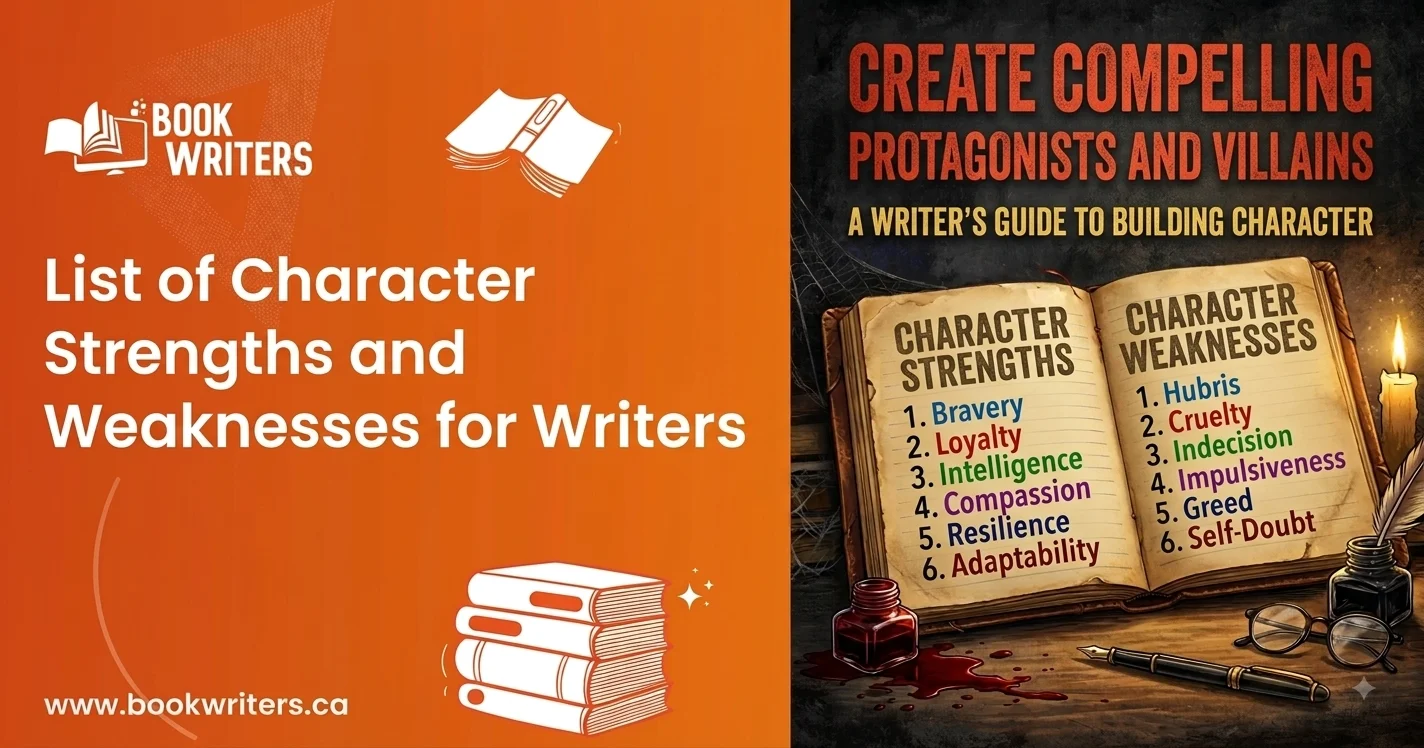
Memorable characters are not simply characters who have some interesting backstories or personalities. People will resonate with those characters who have realistic traits, flaws, motivations, and reactions. Characters who never make any mistakes might seem unrealistic to the reader, whereas characters who have negative traits might be hard to understand.
The best fictional personalities are those that possess good traits but also some flaws which affect their choices.
What Are the Most Useful Character Strengths for Writers?
Character strengths are virtues that determine the way a character reacts to challenges and deals with other people. These strengths can range from being courageous, patient, honest, loyal, creative, empathic, determined, curious, responsible, adaptive, intelligent, leadership, compassionate, and confident.
Strengths become even stronger when they have an impact on the actions of the character. Thus, loyalty will compel the character to defend a friend in challenging situations, whereas curiosity will lead the character to examine things which no one else is interested in.
The author should demonstrate character strengths not only by telling about them but through actions as well.
How Can Writers Choose Realistic Character Weaknesses?
These are limitations that can result in conflicts arising from their weaknesses. It is important to note that these weaknesses do not have to be major personality flaws. Some of the weaknesses include impatience, insecurity, stubbornness, jealousy, fear of failure, inability to communicate effectively, pride, and the inability to trust people.
The best weaknesses are those that can be derived from the experiences of the character. For example, a person who has been betrayed will find it hard to trust others while an ambitious character will tend to be very competitive.
The character can start by denying his/her weaknesses, then face the consequences of the weaknesses, and finally learn to handle the weaknesses.
What Should a Character Strengths and Weaknesses List Include?
A character strengths and weaknesses list should contain qualities that affect behavior, relationships, decisions, and conflict. Rather than selecting traits randomly, writers can choose qualities that support the character’s role and personal journey.
| Strength | Weakness | Impact on the Plot |
| Courage | Recklessness | Acts rashly without proper planning |
| Intelligence | Overthinking | Provides solutions but procrastinates |
| Loyalty | Unconditional trust | Defends others even after warnings |
| Confidence | Arrogance | Works as a leader but ignores advice |
| Compassion | Selfishness | Assists others but neglects oneself |
| Curiosity | Rashness | Gains knowledge but causes trouble |
| Determination | Obstinacy | Persists but does not adapt easily |
It ensures that the characters don’t end up being flat. Sometimes the strength can get the character into trouble, and the weakness can help him/her.
Which Character Development Traits Matter Most?
Character development traits should support both the plot and the character’s emotional journey. Important areas include goals, values, fears, beliefs, relationships, habits, communication style, and emotional reactions.
Two characters might have the same trait, but apply it differently because of their differing values or motivations. An intelligent character might use intelligence to help people, while another uses intelligence for power. It all depends on their values and motivations.
So writers should take into account how various character traits interact. For example, confidence and empathy will lead to a supportive leadership trait, while confidence without empathy may lead to controlling behavior.
How Do You Build a Character With Conflicting Qualities?
To understand how to build a character, begin with three questions: What does the character want? What stands in the way? Which personal quality makes the situation harder?
It is possible for a character to exhibit opposing characteristics without being contradictory. A person might be generous, yet he/she becomes jealous due to lack of recognition. On the other hand, another individual is very sure of himself/herself but feels scared of being rejected.
These conflicts are essential as they make the personality of an individual more realistic, since it is rare for an individual to act out a particular characteristic in all situations.
What Character Flaws Can Create Meaningful Conflict?
Character flaws examples include jealousy, pride, selfishness, perfectionism, dishonesty, impatience, insecurity, avoidance, and excessive need for approval. A flaw becomes valuable to a story when it creates consequences.
For example, perfectionism could result in missing out on something due to spending too much time trying to perfect every small thing. Fear of failing could prevent a character from following up on an important task. Jealousy could affect a great relationship negatively.
The flaw does not necessarily have to be recognized by the character right away. It can even be recognized by other people first.
How Can Writers Use a Character Traits List Effectively?
A character traits list for writers can be used as a simple planning tool before drafting. Instead of giving every character dozens of qualities, select a few that clearly influence their behavior.
Two or three strong traits, one or two weak traits, an overall motive, a strong fear, an important value, and one changing trait are recommended.
Such a method allows keeping the consistency of characters in different chapters. It is also helpful in evaluating characters’ decisions since writers can think if this action suits their character.
What Makes Creating Believable Characters Easier?
Creating believable characters becomes easier when their actions have understandable reasons. A character should not make a decision simply because the plot needs it. Their behavior should reflect their experiences, goals, knowledge, relationships, and emotional state.
A number of small traits can add to a character’s individuality. These traits include such things as language habits, daily routine, tastes, reaction to stress, and ways of resolving conflicts.
Characters can also react to situations differently depending on their personalities. One character may deal with an issue right away while another one would avoid it or take time to think about it.
How Can Writers Choose Positive Qualities Without Making Characters Perfect?
A character strengths list can help writers select positive qualities while maintaining balance. Useful choices include resilience, adaptability, resourcefulness, fairness, discipline, humor, ambition, generosity, open-mindedness, and emotional awareness.
What is most significant about this is the linking of such strengths to what happens to the character. For example, resilience may assist the character in recovering from failure while fairness may cause conflict since loyalty to the person will clash with justice.
To those writers who are self writing Canada, having good characterization still counts since independent publishing needs a well-written manuscript.
After writing the manuscript, it is essential for the writer to assess every main character and find those situations where the character acts inconsistently.
In addition to writing electronic versions of their books, authors can use platforms like Kindle and KDP. The development of a good manuscript serves as a better base for editing and writing.
When writing audio editions, authors need to think about whether characters have distinct personalities and speech patterns. Distinctiveness helps readers listen to conversations easily and also helps audiobook production in the process of audio edition creation.
Why Is Writing Complex Characters Important?
Writing complex characters makes stories more emotionally convincing because readers can understand different sides of a personality. Complexity does not require an extreme backstory or mysterious personality. It can come from believable contradictions, competing priorities, and changing emotions.
A character can be self-serving but caring about others. A character can be selfless but yearn for recognition. A character can be brave in some situations but insecure in others.
The idea here is to have characters who make sense in their own story world. If their strengths, weaknesses, motives, and experiences all fit together, then that is when a character becomes more believable.
Conclusion
The reason why a character seems real is due to having both positive and negative aspects of themselves. The combination of good qualities, faults, reasons for their actions, and opposing feelings will help a writer develop strong characters for compelling stories.