 Live Chat
 Live Chat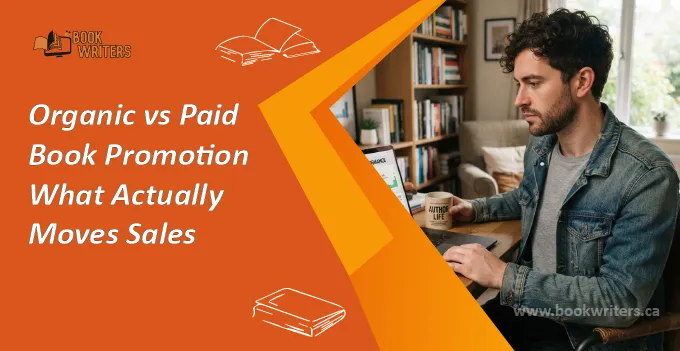
Publication of the book constitutes just one component of making it accessible to the reading public. Once the book becomes available for purchase through various publishing options, including Amazon Kindle Direct Publishing (KDP), there remains the issue of making sure that people who would want to read the book know about its availability. This can happen either through organic promotion of the book, which takes time and builds the visibility organically; paid promotion, where the author uses financial resources to increase the visibility of the book; or a combination of the two.
It then becomes an issue of where to put your efforts in terms of your time, money, and other resources.
What Are the Main Differences Between Organic and Paid Promotion?
Organic book marketing focuses on attracting readers without directly paying for every impression or click. It can include author websites, search-friendly content, social media activity, email newsletters, reader communities, book reviews, interviews, and word-of-mouth recommendations.
Promotion through paid means entails the use of financial resources to showcase the book or other materials related to the book to the potential reader. It may be through the use of ads placed at book finding websites, search engines, social networking sites, or retailer ad networks.
How Do the Two Approaches Compare?
| Factor | Organic Marketing | Paid Marketing |
| Primary resource | Time and effort | Marketing budget |
| Rapidity | Normally gradual | Usually faster |
| Targeting of audience | Wider normally | More targeted usually |
| Cost efficiency | Cheaper directly | Needs budget consistently |
| Longevity of results | Generates continued visibility | Ends after marketing stops |
| Attribution | Difficult to measure | Easier to track |
Neither strategy guarantees sales. This depends on many factors including the genre, cover art, descriptions, prices, audience relevance, and the execution of the marketing itself.
Which Book Promotion Strategies Can Help Authors?
Authors can use different methods depending on where their readers spend time. Search-optimized articles can help people discover a book when searching for relevant topics. Social media can support direct interaction with readers, while email newsletters can help authors maintain relationships with existing audiences.
Reviews and recommendations can also contribute to credibility. For example, an author writing nonfiction may publish useful educational content around the subject of the book. A fiction writer may focus on reader communities, genre discussions, excerpts, and launch activities.
Consistency is what matters most. Doing promotions sporadically without being clear about who you are targeting with them and for what reason may not yield much. Targeted promotional efforts, which link your book to reader interests, may be more effective.
How to Promote a Book Without Spending on Ads
Authors with limited budgets can begin by improving the areas they control. The book’s title, subtitle, description, categories, keywords, cover, and author profile should communicate clearly with the intended audience. On KDP, appropriate metadata can help a Kindle book appear for relevant searches, although metadata alone does not guarantee sales.
Authors can also create useful website content, participate in relevant communities, build an email list, and encourage legitimate reviews from readers. Guest appearances on podcasts, interviews, newsletters, or relevant websites may provide additional exposure.
These activities will most certainly need patience. Organic visibility may be gained through indexing, sharing, discovery, and recommendations. Nevertheless, an author needs to determine which of the above-mentioned activities brings visits to their website, views on the book page, subscribers, or purchases.
When Does Paid Book Advertising Make Sense?
Paid advertising can be useful when an author has a clearly defined readership and a promotional message that has already been tested. Advertising can place a book in front of people based on interests, searches, demographics, or reading behavior, depending on the platform.
What Are Paid Book Advertising Platforms Used For?
Different platforms provide different targeting and measurement options. Retailer advertising can help readers discover books while they are already browsing for related titles. Social advertising can reach audiences based on interests or behaviors, while other promotional services may provide access to established reader audiences.
Paid advertising should not be treated simply as a way to buy sales. An advertisement may generate clicks without producing purchases if the book page, cover, description, reviews, pricing, or genre positioning does not match reader expectations.
How Can Authors Measure Book Marketing ROI?
Authors should connect promotional spending with measurable outcomes. Useful indicators can include advertising impressions, clicks, click-through rate, conversion rate, cost per click, book sales, royalties, and read-through for a series.
Book marketing ROI should therefore be considered in relation to the author’s actual objective. A campaign designed to build awareness may have a different measurement approach from one designed specifically to generate immediate purchases.
For example, an author may spend a limited amount testing advertisements for one Kindle title. If the campaign produces clicks but very few purchases, the author can examine the book page and advertising message before increasing the budget.
What Kind of Promotion Actually Works Best?
There is no single method that produces consistent results for every author or genre. Book promotion that actually works usually depends on matching the promotional method with the intended readership and measuring the results.
For a new author, organic activities can establish a foundation before significant advertising expenditure begins. An author with an existing audience may have more opportunities to use newsletters, reader communities, and direct communication. A book with strong commercial positioning may also be suitable for carefully tested paid campaigns.
Can Organic and Paid Promotion Be Combined?
Yes. A combined approach can allow authors to build long-term visibility while using paid promotion for specific launches, seasonal campaigns, or selected titles. This can be especially useful when a book already has a strong sales page and clear audience.
Self-publishing promotion may therefore involve several connected activities rather than one campaign. An author could use organic content to establish credibility, build an email audience, and then use paid advertising to increase exposure during a launch or promotional period.
The key is to evaluate results rather than simply increase promotional activity. Authors should identify which channels bring relevant readers, compare costs with measurable outcomes, and adjust campaigns when the results do not support continued spending.
What Should Authors Prioritize Before Promoting?
Promotion cannot completely compensate for an unclear book offer. Before spending money, authors should check the quality of the manuscript, cover, description, formatting, pricing, categories, keywords, reviews, and retailer page. The intended audience should also be clearly defined.
How to promote a book effectively depends on understanding the reader first and selecting channels that can realistically reach that reader. Organic and paid methods can both contribute to visibility, but neither guarantees sales.
The authors can start small, measure what matters, and build on those practices which prove to be effective. This will make the practice of promotion become part of the publication process, making it a measurement of success instead of mere visibility.
For authors who need professional assistance with planning and executing campaigns, book promotion services can provide support with audience research, promotional content, advertising management, outreach, and campaign coordination. Authors should review the scope of each service and understand what outcomes can realistically be measured before committing to a promotional package.
Canadian book writers can similarly consider promotion according to their genre, readership, publishing route, and target market rather than relying on a single promotional channel. Whether the book is distributed through KDP, other retailers, or multiple channels, a clear audience and consistent measurement can help guide promotional decisions.
Conclusion
Book promotion will be most effective for authors when they manage to merge audience targeting with tracking and measuring results. Organic marketing strategies can help to create an image and establish relationships with potential readers, while paid marketing techniques will allow for quick exposure among specific groups of people.
Rather than focusing on just one type of promotion, authors can try out various types of promotion and measure the results in order to optimize the process.