 Live Chat
 Live Chat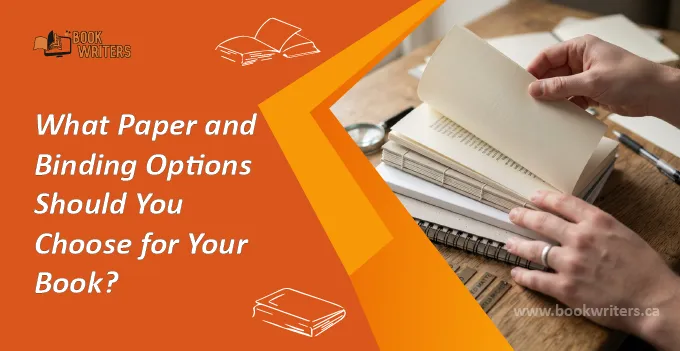
The selection of paper type and binding process forms an important component of publishing a book. This is because the choices made will impact the look, feel, performance, and readability of a book. It might increase the readability and add value and professionalism to the book but since there are various printing processes, papers, and binding processes, it might be difficult to make a choice among many.
Knowledge on the book binding options and paper types will enable authors to come up with the best decision regarding their manuscript production process. Be it a novel, workbooks, poetry or illustrations, there are specific materials that should be chosen.
How Do Different Book Paper Types Affect Readability?
The type of paper affects readability, durability, weight of the printed sheets, and general aesthetics. There are various book paper types that have different uses depending on how the reader intends to use the book.
Uncoated paper is usually applied to novels, non-fiction, and educational books as it feels natural and avoids reflection. Cream paper is generally ideal for fiction books and prolonged reading, whereas white paper gives good contrast when dealing with pictures and technical content.
Coated paper, such as glossy and matte, is usually applied for art and photographic books. The gloss finish increases image brilliance, whereas the matte finish gives a soft look with less reflection.
Authors should also consider ink visibility, page opacity, and the possibility of ink showing through thin paper. Selecting paper that complements the manuscript helps create a comfortable and consistent reading experience.
Which Binding Style Is Suitable for Your Book?
Binding will determine the level of security of the pages in the book as well as the opening of the book. Each of these binding methods will have some pros, which depend on the length and nature of the book.
Perfect binding is the most commonly used binding method in paperback books, novels, and even some non-fiction books. Pages are collected and bound with adhesive to a flexible cover to form a clean spine, where the name of the book can be shown.
Case binding is another type of binding mostly used in hard cover books. In case binding, there is a rigid cover that protects the book. Saddle stitch binding can also be used in booklets and short books using staples on the foldable spine of the book.
Spiral and wire-o binding will ensure that pages can be easily turned around.
What Is the Difference Between Hardcover and Paperback Binding?
In comparison between hard cover vs paperback binding, the writer must consider durability, cost of production, mobility, and the needs of the intended readership. Both hard cover and paperback are capable of producing professional books.
| Feature | Hardcover | Paperback |
| Cover | Stiff and tough | Soft and light |
| Durability | Furnishes better cover protection | It varies depending on the stock and care of the cover |
| Cost of production | Higher | Lower |
| Portability | Heavy and bulky | Lighter and portable |
| Applications | Gift copies, expensive books, commemorative books | Novels, regular non-fiction, mass market books |
Hardcover editions may suit books intended for frequent handling, gifting, or long-term preservation. Paperbacks are often practical for everyday reading, affordable distribution, and authors seeking a lower-cost format.
The final decision should reflect the book’s intended purpose rather than appearance alone. Authors should also compare printing quotes and consider how format choices affect the retail price.
How Should You Choose the Right Paper Weight and Cover Material?
Paper weight affects the thickness, flexibility, and physical feel of a printed book. Understanding book printing paper weight helps authors avoid selecting paper that feels too thin, makes the book unnecessarily heavy, or increases production expenses.
Weight of the paper is often measured in GSM (grams per square meter); however, different systems of measurement can be used by printing companies. The higher GSM means that the paper will be heavier, but not always thicker and less opaque, depending on the quality of paper.
When thinking about the paper for the interior pages, writers need to take into account the length of the manuscript and how many illustrations it will have; books with many pictures will need more thick paper than novels without any.
When authors choose book cover material, they should consider how the book will be handled, stored, and distributed. Paperback covers commonly use flexible cardstock, sometimes enhanced with matte or glossy lamination. Hardcover editions typically use rigid boards covered with printed paper or other finishing materials.
Requesting physical samples can help authors compare textures, flexibility, and print quality before approving a final specification.
How Can Authors Match Printing Materials to Their Budget?
A practical book production guide should consider both the reader’s experience and the financial implications of material selection. Premium paper and binding may enhance a book’s presentation, but they can also increase manufacturing costs.
Authors preparing a budget should compare multiple printing specifications rather than evaluating quotes based on price alone. Page count, trim size, color printing, paper weight, binding style, and order quantity can all influence the final cost.
For authors using KDP or Kindle Direct Publishing, print specifications should be checked against the platform’s current requirements. KDP offers paperback and hardcover publishing options, with available printing choices depending on the selected format and book specifications.
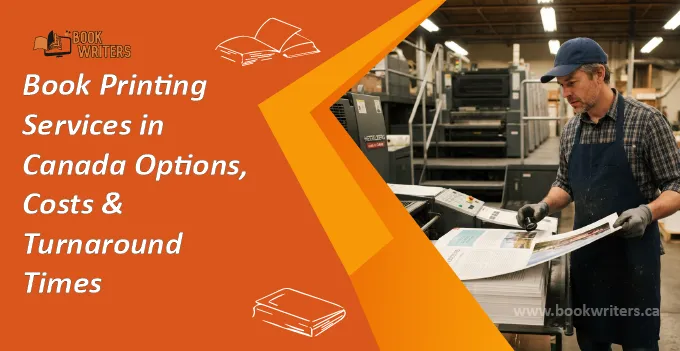
For Canadian authors, book printing Canada providers may offer different production methods, turnaround times, and material selections. Comparing local printing services with online print-on-demand options can help authors understand their choices before committing to a production method.
What Should You Check Before Finalizing Your Book Materials?
Before approving a print-ready manuscript, authors should review the complete production specifications. Confirm the trim size, interior paper selection, cover stock, binding style, page count, and finishing requirements.
A physical proof can reveal issues that may not be obvious on a computer screen, including paper opacity, text contrast, cover alignment, and how comfortably the book opens. Authors should inspect the proof under normal reading conditions and verify that the chosen materials support the intended reading experience.
Seeking professional guidance through book writers services can also help authors coordinate manuscript preparation, formatting, and printing decisions. Reviewing specifications early can reduce avoidable revisions and help keep the production process organized.
Conclusion
In conclusion, making a selection of which paper and which kind of binding is appropriate for one’s book depends on several factors. These include the nature of the contents, the target audience, the available budget, and the intended purpose of publishing the book. By assessing various self-publishing materials, examining the printing requirements, and having an actual proof of the book, the author will be able to make appropriate choices.